A Substack for Apps Is Inevitable
Why software is about to follow the same path writing took with Substack.
"Enough technology — usually from fairly diverse places — comes together and makes something that’s a quantum leap forward possible."
My bet for 2026 is this: we will see the emergence of a creator-first app platform. Something that does for software what Substack did for writing.
A single platform where an individual can go from idea to working app to paying customers without stitching together ten different tools.
Build the app. Test it. Host it. Charge for it. Distribute it. Support users. All in one place. The platform takes a commission, and the rest flows to the creator.
Not a prediction in the crystal-ball sense. More like pattern recognition. When a certain kind of friction becomes the bottleneck, platforms tend to appear to remove it. And right now, that friction is very clear.
# The Pattern We’ve Seen Before
This has happened before. Most clearly with writing.
In the early days of the internet, publishing was possible but painful. You wrote HTML by hand, uploaded files via FTP, managed your own server. Writing online was less about ideas and more about tooling. Only people who were technically inclined bothered.

My first homepage from 2003
Then came content management systems. WordPress, Mambo, and others lowered the bar. You could write without worrying about markup or servers. Creation became easier, but distribution and monetization were still external problems. If you wanted to make a living, you usually needed a media house.
The next shift was hosted platforms. You didn’t just write. You published. But still, payments, subscriptions, and community lived elsewhere.
And then Substack happened. Writing, publishing, payments, subscriptions, and discussion collapsed into a single surface. The friction that remained wasn’t technical anymore. It was creative and economic. What to write. Who to write for. How to sustain attention.
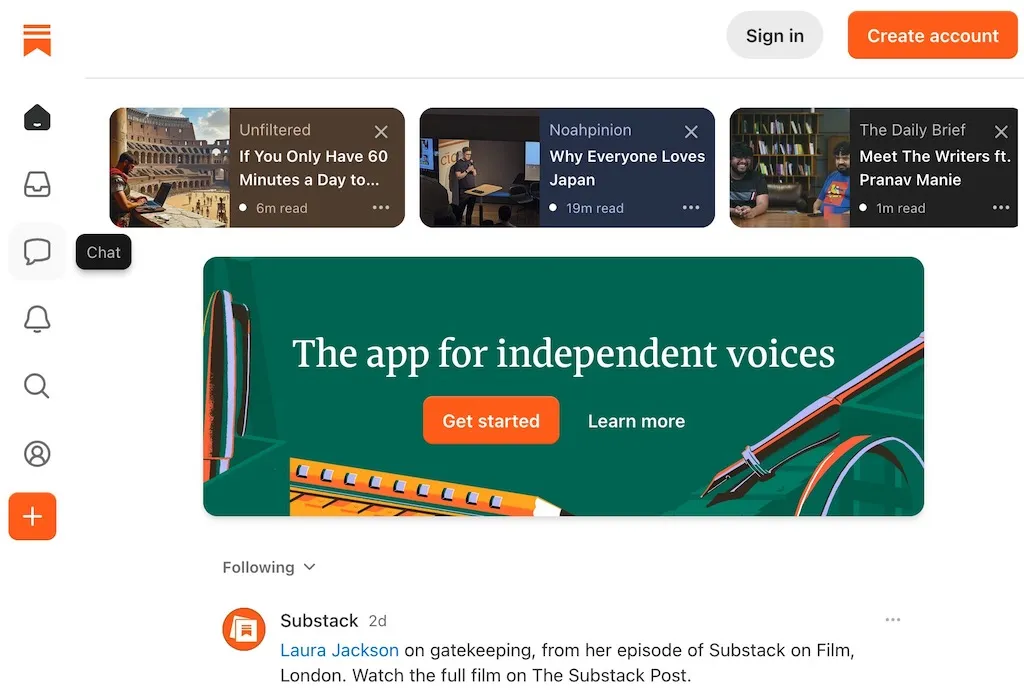
Substack brings writing, publishing, subscription, communities, and discussion together.
That’s the pattern:
expression → simplification → hosting → monetization + distribution.
# Where Software Creation Is Stuck Today
Software creation today sits somewhere in the middle of that arc.
On the creation side, things have changed dramatically. Large language models have collapsed the cost of getting from an idea to a working prototype. With the right prompt, you can generate application scaffolding, UI, database logic, and basic workflows. Tools like Cursor or Lovable are proof that this is no longer theoretical. A single person can now build what once required a small team.
But commercialization has not collapsed in the same way.
To take a working app and make it available to real users, you still need to:
- Choose hosting
- Configure databases
- Set up authentication
- Wire payments
- Manage deployments
- Handle customer support
- Think about distribution
Each piece is individually solvable. Collectively, they still form a wall.
The hardest step today is no longer “can I build this?”
It’s “can a stranger find this, trust this, and pay for this?”
# What a Creator-First App Platform Would Do
A Substack for apps doesn’t invent new technology. It rearranges existing ones.
It brings together:
- Development environments
- Runtime and hosting
- Databases and authentication
- Payments and subscriptions
- Discovery and distribution
- Customer communication and support
Possibly as Lego blocks. Possibly by partnering with best-in-class services underneath. But from the creator’s perspective, it feels like one surface.
You describe what you want to build.
You test it.
You publish it.
People can discover it on the platform.
They can pay immediately.
You can iterate without worrying about plumbing.
The platform takes a cut, just like Substack or Gumroad. In return, it removes the non-creative burden that keeps most people from shipping software to customers.
This is not an app store.
Not a PaaS.
Not a no-code tool.
It’s a publishing platform for software, where apps are the content.
# Why This Window Is Opening Now
The reason this hasn’t fully existed before is simple. Creation was expensive. When building software required deep expertise and teams, it made sense that infrastructure was fragmented and specialized.
That constraint is gone.
LLMs have shifted the bottleneck. Creation has become abundant. People can now build applications locally with astonishing speed. But the path from local success to public, paid usage is still narrow and painful.
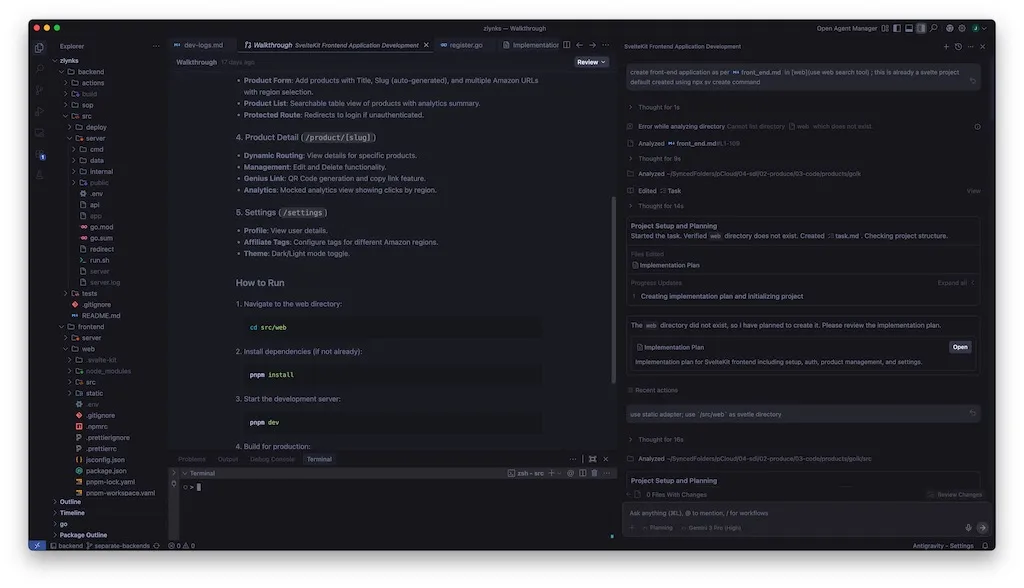
Anyone can build an app by describing what it should do
That mismatch creates pressure.
When creation outpaces distribution and monetization, platforms emerge to rebalance the system. That’s what happened with blogging. That’s what happened with newsletters. And that’s why this feels inevitable for apps.
The remaining friction is not technical impossibility. It’s integration and incentives. Someone will package this into a coherent, creator-first offering because the demand is now large enough and visible enough.
# What This Actually Changes
If this happens, building software stops being primarily an engineering problem. It starts becoming a publishing problem.
The constraints move away from servers and SDKs and toward questions like:
- What problem is worth solving?
- Who is this for?
- Why should anyone pay?
Those are different skills. And they deserve their own discussion.
That’s where agency and taste come in. But that’s a separate essay.
For now, the important thing is this:
when the friction moves, the center of gravity moves with it. And in the next phase of software, the center of gravity shifts decisively toward creators.
Under: #wins , #insights